About the Department
Advanced endoscopy covers modern, minimally invasive procedures used in the diagnosis and treatment of digestive system diseases, which can be an alternative to surgery in suitable patients. Thanks to advanced imaging systems and specialised endoscopic techniques, many conditions can be treated endoscopically without the need for open surgery.
At our Advanced Endoscopy Centre, we take a holistic approach from diagnosis to treatment, with patient safety and scientific criteria at the forefront.
What Is Advanced Endoscopy?
Advanced endoscopy is a field that goes beyond standard gastroscopy and colonoscopy and includes therapeutic endoscopic procedures. With these methods, certain lesions on the surface or in the deeper layers of the digestive tract can be removed endoscopically without a surgical incision.
Advanced endoscopic procedures are increasingly preferred today because they are
- less invasive,
- involve a shorter hospital stay,
- and allow faster recovery in suitable patients.
The most appropriate method for each patient is determined after a detailed clinical evaluation.
How Does It Differ from Diagnostic Endoscopy?
Diagnostic endoscopy covers examinations aimed at detecting disease, whereas advanced endoscopy refers to procedures that include treatment together with diagnosis. In this way, some patients can be treated without the need for a second procedure or surgical operation.
An Alternative to Surgery in Suitable Patients
Advanced endoscopic methods may not be suitable for every patient. However, in carefully selected cases they can be considered as an alternative to open or laparoscopic surgery. This approach can offer advantages such as
- a shorter recovery time,
- less tissue trauma,
- and a faster return to daily life.
Which Areas Does Advanced Endoscopy Cover?
Advanced endoscopy has a wide range of applications covering different parts of the digestive system. Evaluations at our centre are planned according to the location of the lesion and the patient’s clinical condition.
Upper Gastrointestinal Tract (Oesophagus – Stomach – Duodenum)
In this area, which covers the oesophagus, stomach and duodenum, advanced endoscopic procedures can be performed for early-stage lesions, polyps, superficial tumours and functional disorders.
Small Bowel Evaluations
In cases such as bleeding or lesions originating from the small bowel, or anaemia of unexplained cause, advanced endoscopic methods can play an important role in diagnosis and treatment.
Colon (Large Intestine)
Large polyps and early-stage lesions found in the colon can be removed in suitable patients with advanced endoscopic techniques, without the need for surgery. This approach can help reduce the risks associated with colon surgery.
Pancreas and Bile Ducts
The evaluation of bile duct and pancreatic diseases and some interventional procedures can be performed with advanced endoscopic methods. These procedures provide important information for diagnosis and treatment planning.
Methods Used in Advanced Endoscopy
At our Advanced Endoscopy Centre, various advanced endoscopic methods are used in the diagnosis and treatment of digestive system diseases. The choice of method depends on the location, size and depth of the lesion and the patient’s general health.
The most appropriate and safest approach for each patient is planned following a multidisciplinary evaluation.
Endoscopic Mucosal Resection (EMR)
Endoscopic Mucosal Resection (EMR) is a method for the endoscopic removal of early-stage lesions and certain polyps in the mucosa of the digestive tract. It is preferred especially for superficial, well-defined lesions.
With EMR:
- lesions can be removed without a surgical incision,
- diagnosis and treatment can be achieved in the same session in suitable patients,
- surgery-related risks can be reduced.
This method is used in patients whose lesion size and borders have been clearly assessed. Not every polyp or lesion is suitable for EMR.
Endoscopic Submucosal Dissection (ESD)
Endoscopic Submucosal Dissection (ESD) is a more advanced and technically more comprehensive endoscopic procedure than EMR. It may be preferred for larger lesions, lesions with irregular borders or those extending into the submucosa.
Key features of ESD:
- it allows the lesion to be removed in one piece,
- it provides clearer results in pathological evaluation,
- it can be an alternative to surgery for early-stage cancers and precancerous lesions.
ESD is a method that requires experience and technical infrastructure. For this reason, patient selection and procedure planning are carried out meticulously.
Peroral Endoscopic Myotomy (POEM)
Peroral Endoscopic Myotomy (POEM) is an advanced endoscopic method performed through the mouth to treat swallowing disorders caused by the muscle structure of the oesophagus.
In this method:
- the muscle layer of the oesophagus is treated endoscopically,
- functional relief can be achieved without open surgery,
- long-term symptom control is the aim in selected patients.
POEM is a treatment option considered especially for achalasia and some oesophageal motility disorders. Suitability is determined after detailed diagnostic tests.
Endoscopic Full-Thickness Resection (EFTR)
Endoscopic Full-Thickness Resection (EFTR) is an advanced technique that allows certain lesions involving all layers of the digestive tract wall to be removed endoscopically.
EFTR:
- can be an alternative to surgery in selected cases,
- is considered particularly for lesions that are difficult to reach or hard to remove with standard methods,
- is performed together with advanced closure systems.
This method should only be planned for suitable patients and by experienced teams.
Endoscopic Retrograde Cholangiopancreatography (ERCP)
ERCP is an advanced endoscopic procedure for the evaluation and treatment of the bile ducts and pancreatic ducts. In addition to diagnosis, it also allows therapeutic interventions.
With ERCP:
- bile duct stones can be removed,
- strictures can be dilated or stents placed,
- procedures can be performed on the bile and pancreatic ducts.
ERCP is performed for specific indications and requires careful planning for patient safety.
Endoscopic Ultrasound (EUS)
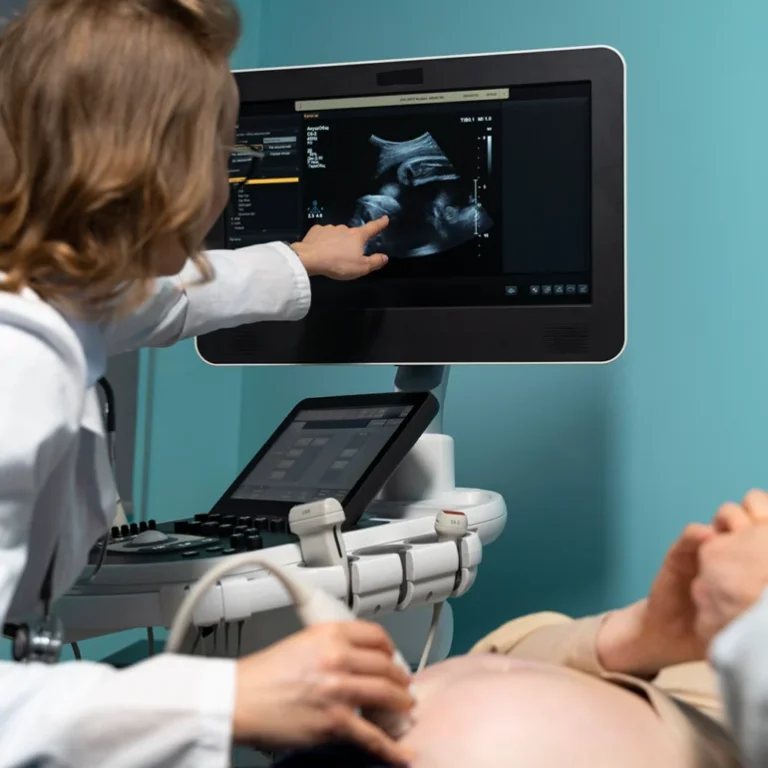
Endoscopic Ultrasound (EUS) is an advanced imaging method that combines endoscopy with ultrasound technology. It allows detailed evaluation of the digestive tract wall and surrounding organs.
With EUS:
- the layers of the digestive tract can be examined in detail,
- lesions of the pancreas and bile ducts can be evaluated,
- tissue samples can be taken when necessary.
This method contributes to appropriate treatment planning by increasing diagnostic accuracy.
Endoscopic Bleeding Control and Haemostasis
Advanced endoscopic haemostasis techniques can be used for digestive tract bleeding. These methods play an important role in bringing active bleeding under control.
Approaches used may include
- injection treatments,
- mechanical clip placement,
- and thermal and combined methods.
Bleeding control is carried out as an emergency or planned procedure depending on the patient’s clinical condition.
When Is Advanced Endoscopy Used?
Advanced endoscopic methods may not be suitable for every patient or every lesion. After clinical evaluation, they may be preferred in the following situations:
- Early-stage stomach and bowel lesions
- Large polyps or polyps at risk of bleeding
- Swallowing difficulty and motility disorders of oesophageal origin
- Endoscopic evaluation of bile duct and pancreatic diseases
- The need for minimally invasive treatment in patients at high surgical risk
Which method is used depends on the patient’s general condition and the characteristics of the lesion.
In Which Diseases and Conditions Is Advanced Endoscopy Considered?
Advanced endoscopic methods are not the first choice for every digestive system disease. However, in carefully selected cases they can offer important advantages in both diagnosis and treatment. For this reason, which method is used for which patient is decided after a detailed clinical evaluation.
Polyps and Early-Stage Lesions
Not all polyps found in the digestive system require advanced endoscopic intervention. However,
- for large,
- flat or irregularly bordered,
- or potentially malignant
polyps and early-stage lesions, advanced endoscopic methods may be preferred.
In this way, the lesion may be removed without surgery in suitable patients.
Unexplained Bleeding and Anaemia
Advanced endoscopic evaluation may be needed for recurrent digestive tract bleeding or bleeding of unclear source, and for unexplained iron deficiency anaemia. These methods can help locate the source of bleeding and treat it in the same session.
Swallowing Difficulty and Oesophageal Motility Disorders
Advanced endoscopic methods can be an important treatment option for swallowing difficulty (dysphagia), oesophageal muscle function disorders and some motility diseases. In these patients, the appropriate endoscopic approach is planned after detailed diagnostic tests.
Suspected Bile Duct and Pancreatic Diseases
Advanced endoscopic methods can be used in the diagnosis and treatment of bile duct stones, strictures and some pancreatic diseases. These approaches can increase diagnostic accuracy and offer treatment without surgery.
Patients at High Surgical Risk
In patients whose general condition puts them at high surgical risk, advanced endoscopic methods can be considered as an alternative when suitable conditions are met. This approach aims to preserve the patient’s quality of life and reduce procedure-related risks.
Which Method Suits Whom?
One of the most important steps in advanced endoscopy is choosing the right method for the right patient. This decision is made by considering the characteristics of the lesion, the patient’s general health and alternative treatment options.
Multidisciplinary Decision-Making
Advanced endoscopic procedures are usually planned through joint evaluation by gastroenterology, general surgery, pathology and, when necessary, radiology. This multidisciplinary approach is of great importance for patient safety and treatment success.
What Is the Patient Journey in Advanced Endoscopy?
Before the Procedure
Before advanced endoscopic procedures, a detailed preparation process is followed for patient safety and procedural success. This process is tailored to the planned endoscopic method and the patient’s general health.
Before the procedure, patients
- undergo a detailed clinical evaluation,
- have the necessary blood tests and imaging planned,
- have their medications, especially blood thinners, reviewed by the doctor.
Fasting times and preparations for the day of the procedure are explained to the patient in detail in advance. When necessary, opinions from other specialties are obtained to increase procedural safety.
What Happens on the Day of the Procedure?
Advanced endoscopic procedures are usually performed under sedation or appropriate anaesthesia. This keeps pain and discomfort during the procedure to a minimum.
Sedation and Anaesthesia
The sedation method is chosen according to
- the type of procedure,
- its duration,
- and the patient’s general condition.
During procedures under sedation, patient comfort is a priority and vital signs are closely monitored throughout.
Procedure Duration
The duration varies depending on the method used. Diagnostic procedures are usually shorter, while advanced endoscopic treatments may take longer. Expected durations are shared with the patient beforehand.
After the Procedure
Same-day discharge is possible for suitable patients. The follow-up plan after the procedure is explained to the patient in detail, and the warning signs to watch for in case of rare complications are clearly stated.
Recovery and Follow-Up After the Procedure
After advanced endoscopic procedures, patients are kept under observation for a certain period. Same-day discharge may be possible for suitable patients.
Discharge and Return to Daily Life
After discharge,
- the diet,
- medications to be taken or temporarily stopped,
- and when to return to daily activities
are explained to the patient in detail.
Many patients can return to daily life within a short time. However, the rest period may vary depending on the method used.
Pathology Results and Check-Ups
Tissue samples from removed lesions are sent for pathological examination. Follow-up and, if necessary, further treatment are planned according to the results. Check-up appointments are scheduled individually for each patient.
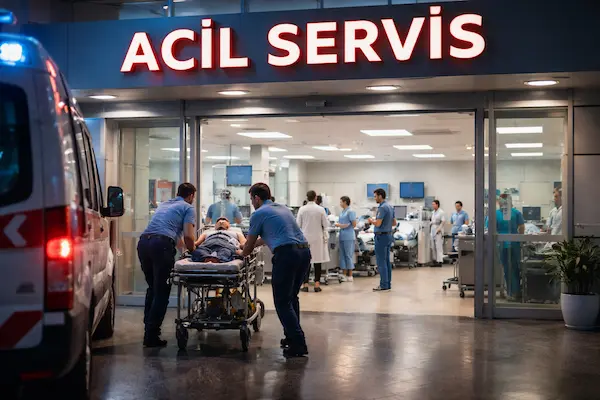
When to Seek Emergency Care
In rare cases, urgent evaluation may be needed after the procedure. Patients are advised to seek medical care without delay in case of severe abdominal pain, heavy bleeding, fever or a marked deterioration in their general condition.
Is Advanced Endoscopy Safe?
Advanced endoscopic procedures are considered safe when performed by experienced teams with appropriate technological infrastructure. However, as with any medical procedure, certain risks may exist.
At our centre, we are guided by
- a patient-safety-first approach,
- adherence to current scientific guidelines,
- and collaboration with surgery and other specialties when necessary.
Possible risks and alternative treatment options are discussed with patients in detail before the procedure.
Managing Complications
Advanced endoscopic procedures are considered safe when performed by experienced teams with appropriate technical infrastructure. However, as with any medical procedure, certain risks may exist.
Possible Risks
Rarely, procedure-related complications such as
- bleeding,
- perforation,
- and infection
may occur. These risks are discussed with patients in detail before the procedure.
Factors That Reduce Risk
At our centre, we are guided by
- By working with experienced doctors,
- advanced endoscopic equipment,
- and up-to-date clinical protocols,
we aim to keep risks to a minimum.
Multidisciplinary Approach
When necessary, we work together with general surgery, radiology and other relevant specialties. This approach helps manage possible complications effectively.
Technologies and Imaging Capabilities
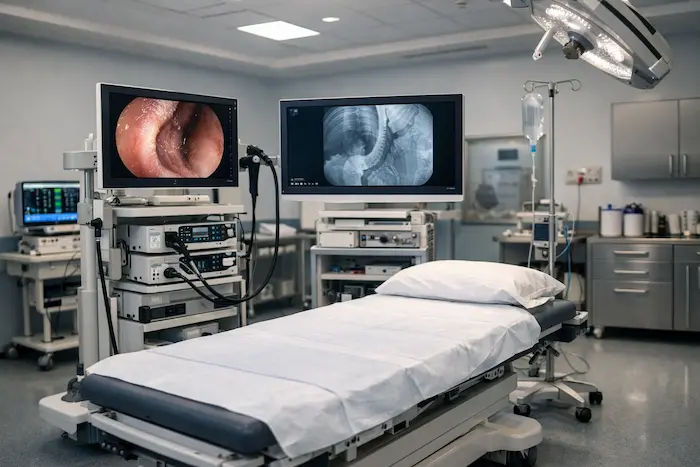
The safe and effective performance of advanced endoscopic procedures is directly related to the technological infrastructure used. Our centre uses endoscopic systems and auxiliary equipment that meet current medical standards.
High-Definition Endoscopic Imaging
High-definition endoscopes allow the mucosa of the digestive tract to be evaluated in detail and the borders and features of lesions to be identified more clearly. This increases both diagnostic accuracy and treatment success.
Advanced Imaging Modes
When necessary, special imaging modes can be used to examine the mucosal structure in more detail. These approaches are particularly valuable in evaluating early-stage lesions.
Sterilisation and Infection Control
Cleaning and sterilisation of endoscopic devices are critical for patient safety. At our centre, the reprocessing of endoscopes and accessories is carried out in line with international infection control standards.
Our Team
Advanced endoscopy is a field that requires teamwork. All procedures at our centre are planned by experienced healthcare professionals with a multidisciplinary approach.
Specialist Doctors
Advanced endoscopic procedures are performed by doctors experienced in this field. Patient evaluation, procedure planning and follow-up are carried out under the doctor’s responsibility.
Endoscopy Nursing and Support Team
Endoscopy nurses and support staff play an active role in preparation before the procedure, monitoring during it and care afterwards. This teamwork is of great importance for patient comfort and safety.
Multidisciplinary Collaboration
When necessary, gastroenterology, general surgery, pathology, radiology and anaesthesiology work together to offer the patient a holistic approach.
Frequently Asked Questions
Can advanced endoscopic procedures be performed on every patient?
No. Suitability is determined by the patient’s clinical condition and the features of the lesion.
Are these procedures an alternative to surgery?
They can be an alternative to surgery in carefully selected patients, but not in every case.
Is a hospital stay required after the procedure?
Same-day discharge is possible for many patients. In some cases a short hospital stay may be needed.
Are the procedures painful?
Because they are usually performed under sedation or anaesthesia, pain is minimal.
I take blood thinners — what should I do?
You must tell your doctor before the procedure. Any change to your medication will be planned by your doctor.
When can I return to daily life after the procedure?
This depends on the method used, but many patients can return to daily life within a short time.