Skip to content
What Are Dental Veneers and Why Are They Preferred?
Dental veneers are thin restorations placed on the front surface of teeth to improve shape, color, size, symmetry, and overall smile balance. They are commonly used in modern aesthetic dentistry for patients who want a more harmonious appearance while preserving as much natural tooth structure as possible. In many cases, veneers are considered when teeth are discolored, slightly worn, mildly misaligned, uneven, chipped, or shaped in a way that affects smile aesthetics.
Rather than changing the entire tooth, veneers are designed to improve the visible front surface. This is one of the main reasons they are often seen as a conservative option in suitable cases. For the right patient, they can provide a natural-looking result without the more extensive preparation that may be required for full-coverage restorations. However, this does not mean veneers are a simple cosmetic shortcut. A well-planned veneer treatment depends on careful diagnosis, healthy gums, stable bite relationships, and realistic expectations.
In Turkey, veneers are frequently requested by both local and international patients because they can address several aesthetic concerns within a structured treatment plan. Still, the decision to proceed should not be based on appearance alone. Before treatment is considered, the dentist evaluates oral health, enamel condition, existing restorations, bite force, clenching habits, and the reason the patient is unhappy with the appearance of the teeth. This evaluation matters because veneers are not only about creating a whiter smile. They must also function comfortably in daily life, including speaking, biting, and long-term oral hygiene.
The term “dental veneers” is sometimes used broadly, and this can create confusion for patients. In everyday use, people may hear expressions such as porcelain veneers, laminate veneers, composite veneers, or even terms that are used interchangeably with crowns. These are not always the same treatment. In general, veneers cover the front surface of the tooth, while crowns cover the entire visible portion of the tooth above the gum line. This distinction is important because each option serves different clinical needs. A patient with healthy teeth and mainly aesthetic concerns may be evaluated differently from a patient with large fillings, significant tooth wear, or structural damage.
Another important point is that veneers are not chosen only for white teeth. Color improvement is one benefit, but shape correction, proportional balance, closure of small gaps, masking of developmental imperfections, and refinement of smile symmetry are also common reasons for treatment. Some patients want to correct a single tooth that looks different from the others. Others may need a broader smile design approach involving several teeth. In both situations, the goal should be to create a result that fits the patient’s facial features, lip line, age, and natural dental appearance rather than producing a uniform or artificial look.
A successful veneer treatment usually starts with listening to the patient carefully. Some people want subtle refinement, while others are looking for a more visible change. The correct approach is not to apply the same design to every patient, but to plan the treatment individually. Tooth proportions, translucency, gum levels, and facial expression all influence the final result. This is why treatment planning is often more important than the restoration itself. Even high-quality materials may fail to look natural if diagnosis and smile planning are not performed carefully.
It is also useful to understand why veneers remain popular despite the availability of other aesthetic options. Teeth whitening may improve color, but it does not change shape or correct wear. Orthodontic treatment may improve alignment, but some patients still want shape and color refinement afterward. Bonding can be helpful in selected situations, yet it may not always offer the same long-term surface characteristics or stain resistance expected from ceramic-based options. Veneers are often preferred because they can combine multiple aesthetic improvements within one treatment concept when the case is suitable.
At the same time, veneers should not be presented as ideal for everyone. They are elective restorations, and like all dental procedures, they have indications, limitations, and maintenance requirements. Patients should understand that this treatment involves professional assessment, careful preparation, laboratory or chairside planning, and regular long-term care. A natural-looking result is usually achieved not by making teeth excessively bright or overly large, but by respecting individual anatomy and function.
For this reason, veneers are best understood as part of a broader restorative and aesthetic treatment philosophy. They are not simply thin shells added for appearance. When planned properly, they can support confidence and smile harmony while remaining compatible with oral health principles. When planned poorly, however, even visually attractive restorations may lead to dissatisfaction, sensitivity, or functional problems over time. That is why a hospital-based and medically informed approach remains especially important for patients considering this treatment in Turkey.
Who Is a Good Candidate for Dental Veneers?
Dental veneers may be a suitable option for patients who want to improve the appearance of their teeth in a conservative and carefully planned way. However, not every patient who wants a more aesthetic smile is automatically a good candidate for this treatment. The decision depends on clinical findings, oral health status, enamel quality, bite pattern, and the specific concern that the patient wants to address. For this reason, veneer treatment should always begin with a detailed examination rather than a purely visual judgment.
In general, veneers are often considered for patients whose main concerns involve the visible front surface of the teeth. These concerns may include persistent discoloration that does not respond well to whitening, minor chips or surface wear, small gaps between teeth, slight asymmetry, uneven tooth shape, and mild irregularities in alignment. In these situations, veneers can help improve the overall smile without necessarily requiring full-coverage restorations. They may also be considered for teeth with developmental defects, enamel irregularities, or longstanding aesthetic differences that affect smile harmony.
A good candidate usually has healthy teeth and gums before treatment begins. This point is essential. If a patient has untreated cavities, active gum disease, significant plaque accumulation, or ongoing inflammation around the gums, these conditions should be addressed first. Veneers are not placed to hide underlying oral disease. They are performed on a foundation that should already be stable and healthy. When gum tissues are inflamed or the oral environment is not well controlled, even a visually attractive restoration may not perform well over time.
Enamel quality is another important factor. Veneers rely on predictable bonding, and bonding tends to be more reliable when there is sufficient healthy enamel on the tooth surface. This does not mean every candidate must have perfect enamel, but it does mean that the dentist needs to evaluate whether the tooth structure can support the treatment properly. Teeth that already have very large fillings, major fractures, or extensive structural loss may not always be ideal for veneers alone. In some cases, another restorative option may provide better long-term support.
Patients who are looking for refinement rather than complete reconstruction are often among the most suitable candidates. Veneers can be highly effective for enhancing what is already present, but they are not the correct answer to every dental problem. For example, a patient with mild spacing and shape concerns may benefit significantly, while a patient with severe crowding, major bite collapse, or advanced tooth wear may need a more comprehensive treatment plan. In such cases, orthodontic treatment, periodontal care, restorative rehabilitation, or bite management may need to be considered before veneers are planned.
The patient’s bite and functional habits also play a major role. People who clench or grind their teeth, especially during sleep, may place excessive stress on restorations. This does not automatically rule out treatment, but it does require careful evaluation. If bruxism is present, the dentist may need to assess the level of wear, jaw function, muscle activity, and the likelihood of future chipping or debonding. Protective measures such as a night guard may become part of the long-term plan. The most appropriate candidate is not simply the person who wants a brighter smile, but the person whose functional conditions allow the restorations to be maintained safely.
Patients should also have realistic expectations about what veneers can and cannot do. A suitable candidate understands that the goal is not to create an artificial or exaggerated appearance, but to improve smile harmony in a way that fits the face, age, and natural tooth proportions. Some patients request results that are excessively opaque, overly white, or disproportionate to their oral anatomy. In these cases, good treatment planning includes education as well as technical execution. The best outcomes are usually achieved when aesthetics and biology are balanced together.
Another feature of a good candidate is commitment to oral hygiene and follow-up care. Veneers do not protect against gum disease, plaque accumulation, or poor brushing habits. Patients still need regular dental visits, consistent home care, and an understanding of how to protect restorations in daily life. Habits such as opening packages with the teeth, biting very hard objects, or neglecting routine cleaning can shorten the lifespan of both natural teeth and aesthetic restorations. In this sense, long-term success depends not only on the procedure itself, but also on how well the patient maintains the result afterward.
For international patients considering treatment in Turkey, suitability should also be assessed in the context of treatment timing. Some cases are relatively straightforward and mainly aesthetic, while others require preliminary care, healing time, or staged planning. A good candidate for veneer treatment in a travel setting is not simply someone who can visit for a short period, but someone whose oral condition allows safe and efficient planning within a realistic clinical schedule. This is why a detailed pre-treatment assessment remains especially important.
Who May Not Be a Suitable Candidate for Dental Veneers?
Patients With Untreated Oral Health Problems
Dental veneers are generally not the first step when a patient has active oral disease. Untreated tooth decay, gum inflammation, periodontal disease, or infection should be managed before any aesthetic restoration is considered. Veneers are placed on teeth that need to be stable and surrounded by healthy gum tissue, so existing disease should not be covered or ignored for cosmetic reasons.
This approach is important not only for appearance, but also for long-term success. If the oral environment is unhealthy at the time of treatment, the final result may be compromised by discomfort, poor gum response, difficulty with bonding, or future restorative failure. For this reason, patients with active dental or periodontal problems usually need foundational care first.
Patients With Severe Tooth Structure Loss
Veneers are usually more suitable when the tooth still has enough healthy structure, especially enamel, to support reliable bonding. If a tooth has extensive damage, very large restorations, deep fractures, or advanced wear, a veneer may not provide enough structural coverage. In these cases, the restoration may need to protect more than just the front surface.
A patient with major structural loss may require a different restorative approach, such as a crown or another form of rehabilitation, depending on the tooth’s condition. The decision should be based on preservation, function, and durability rather than the assumption that veneers are always the most aesthetic option.
Patients With Significant Bite Problems
Not all smile concerns are limited to color or tooth shape. Some patients have deeper functional issues such as severe crowding, a heavily unbalanced bite, edge-to-edge contact, or advanced wear caused by occlusal instability. In these situations, veneers alone may not solve the underlying problem and may even be exposed to excessive stress after placement.
When the bite is not stable, the restorations may be more vulnerable to chipping, debonding, or discomfort over time. These patients often need a broader evaluation that may include orthodontic planning, bite adjustment, or restorative sequencing before veneers are considered as part of the final aesthetic phase.
Patients With Bruxism or Heavy Clenching Habits
Bruxism, which includes clenching or grinding of the teeth, can place repeated force on restorations. Patients who grind their teeth during sleep or clench heavily during the day may not always be ideal veneer candidates unless this risk is carefully assessed and managed. The concern is not only fracture, but also excessive stress on the adhesive interface and surrounding tooth structure.
This does not mean veneer treatment is automatically impossible in every case of bruxism. However, it does mean that case selection becomes more cautious, material choice becomes more important, and long-term protection such as a night guard may be necessary. Without this level of planning, aesthetic treatment may not remain stable.
Patients Seeking Veneers Instead of Necessary Orthodontic Care
Some patients want veneers to correct teeth that are significantly rotated, crowded, or positioned outside the arch. While veneers can improve the appearance of mild irregularities, they are not a substitute for appropriate orthodontic treatment in every case. If the position of the teeth creates a structural or functional problem, masking it with restorations may require unnecessary preparation.
A medically sound plan should first ask whether the teeth should be moved rather than simply reshaped. In some cases, orthodontic alignment followed by limited aesthetic refinement may be more conservative and more beneficial in the long term than using veneers to force a visual correction.
Patients With Unrealistic Cosmetic Expectations
A suitable veneer plan depends not only on the mouth, but also on the patient’s expectations. Some individuals request results that are much brighter, larger, or more uniform than what would appear natural in relation to their face, age, lip movement, and smile line. When expectations are unrealistic, even technically successful treatment may lead to disappointment.
This is why communication is part of clinical suitability. If a patient is expecting an artificial result that conflicts with oral anatomy or long-term function, treatment planning should include education and boundary setting. Veneers should enhance natural smile harmony rather than create a design that is visually striking but biologically inappropriate.
Patients Unable to Maintain Long-Term Oral Care
Dental veneers still require daily oral hygiene, professional maintenance, and regular follow-up. Patients who are unlikely to brush effectively, attend dental check-ups, or protect their restorations from damaging habits may not be ideal candidates for elective aesthetic treatment. Veneers do not eliminate the need for long-term responsibility.
The success of treatment depends not only on placement, but also on maintenance over time. If the patient is not ready to support the result with appropriate care, the treatment may not deliver the expected long-term benefit. For this reason, commitment to oral health remains an essential part of candidacy.
Patients Who Need a Different Treatment Priority
In some cases, the main concern may appear aesthetic, but the real treatment priority is different. A patient may need periodontal therapy, restorative stabilization, endodontic care, or full functional rehabilitation before cosmetic treatment is even discussed. When this happens, veneers should be viewed as a later option rather than the starting point.
A hospital-based and medically guided approach is valuable because it helps place aesthetics in the correct clinical order. The goal is not simply to improve appearance quickly, but to do so at the right time, for the right reason, and on a healthy functional foundation.
Types of Dental Veneers
Porcelain Veneers
Porcelain veneers are among the most commonly preferred options in aesthetic dentistry because they can offer a natural appearance, color stability, and a refined surface texture. They are usually produced in a dental laboratory and designed to match the patient’s facial features, tooth proportions, and smile line as closely as possible.
These veneers are often chosen for patients who want long-term aesthetic improvement in tooth color, shape, and symmetry. Their surface tends to resist staining better than some direct restorative materials, which makes them especially appealing for patients seeking stable visual results over time.
Laminate Veneers
The term laminate veneers is often used interchangeably with porcelain veneers, especially in patient-facing communication. In many clinical settings, it refers to thin ceramic restorations bonded to the front surface of the teeth with minimal preparation when the case is suitable.
This option is often discussed in more conservative treatment planning because the restoration is designed to preserve as much natural tooth structure as possible. However, not every patient is a candidate for minimal-preparation laminate treatment, and the final decision depends on enamel availability, tooth position, and aesthetic goals.
Composite Veneers
Composite veneers are typically applied directly to the tooth by the dentist during the clinical appointment. They are shaped chairside using composite resin and may be preferred in selected cases involving minor chips, small gaps, contour correction, or limited aesthetic improvements.
One of the main advantages of composite veneers is that they can often be completed in a shorter time and may allow easier repair if minor damage occurs. At the same time, long-term surface behavior, gloss retention, and stain resistance may differ from ceramic-based alternatives, so material choice should be guided by case needs rather than speed alone.
Minimal-Prep and No-Prep Veneers
Some veneer designs are planned with very limited enamel reduction, and in carefully selected cases, preparation may be minimal or nearly absent. These approaches are sometimes described as minimal-prep or no-prep veneers and are generally considered only when the tooth position, size, and facial contour allow additional material without creating bulk.
Although this concept may sound attractive, it is not automatically the best option for every smile. If the teeth are already prominent or require significant reshaping for balance, avoiding preparation completely may produce an unnatural result. Conservative treatment is valuable, but only when it supports both appearance and function.
Ceramic Material Variations
Within porcelain-based restorations, different ceramic materials may be selected according to aesthetic and functional requirements. In some cases, highly aesthetic materials are preferred for their translucency and natural light behavior, especially in the front teeth where visual detail is important.
Material choice should not be reduced to a marketing label. The most appropriate ceramic depends on factors such as tooth color, preparation design, bite force, adjacent dentition, and the degree of masking required. A natural result usually depends on matching the material to the clinical situation rather than choosing the most popular name.
Veneers and Crowns Are Not the Same
Patients often encounter confusing terminology when researching treatment options, especially online. Veneers and crowns may both improve the appearance of teeth, but they are not the same restoration. Veneers cover mainly the front surface, while crowns cover the full visible part of the tooth above the gum line.
This distinction matters because the indication is different. Veneers are generally considered when the tooth is structurally sound and the main concern is aesthetic refinement. Crowns may be more appropriate when there is greater structural damage, larger restorations, or a need for broader reinforcement.
Choosing the Right Type
There is no single veneer type that is correct for every patient. The most suitable option depends on oral health, enamel quality, tooth alignment, bite pattern, aesthetic expectations, and whether the goal is subtle improvement or more comprehensive smile enhancement.
For this reason, treatment planning should begin with diagnosis rather than material preference. A patient may arrive asking specifically for porcelain or composite veneers, but the final recommendation should be based on what is medically appropriate and likely to remain stable over time.
Dental Veneers vs Crowns vs Bonding
Understanding the Main Difference
Dental veneers, crowns, and bonding are all used to improve the appearance of teeth, but they do not serve the same purpose. Although patients may compare them as if they are interchangeable, each option is designed for a different level of structural support, aesthetic correction, and clinical need.
The main difference lies in how much of the tooth is involved. Veneers are placed on the front surface of the tooth, crowns cover the entire visible portion above the gum line, and bonding is usually applied more locally to correct small imperfections with composite material.
When Veneers May Be Preferred
Veneers are often considered when the tooth is generally healthy and the main goal is to improve visible aesthetics. They may be suitable for correcting discoloration, small chips, slight asymmetry, mild spacing, or shape irregularities affecting the smile zone.
Because veneers usually preserve more natural tooth structure than crowns, they are often preferred in cases where the tooth does not need full coverage. This makes them a more conservative option in selected patients, especially when enamel is sufficient and the functional conditions are favorable.
When Crowns May Be More Appropriate
Crowns are usually considered when the tooth needs more than surface-level aesthetic improvement. A tooth that has a large filling, major fracture, root canal treatment history, advanced wear, or significant structural weakness may require full coverage for protection and durability.
In these situations, choosing a veneer only for cosmetic reasons may not provide enough support. A crown may offer better long-term stability because it surrounds the tooth more completely and is designed to reinforce weakened dental structure as well as improve appearance.
When Bonding May Be Considered
Bonding is often used for smaller aesthetic corrections that do not require indirect laboratory-made restorations. It may be suitable for minor chips, limited contour adjustments, closure of small gaps, or masking of localized surface irregularities.
This option can be useful when the correction is modest and the tooth structure is otherwise healthy. It is also commonly chosen in situations where a more reversible or conservative short-term approach is preferred, although the long-term surface behavior may differ from ceramic restorations.
Differences in Tooth Preparation
One reason these treatments are often discussed together is that they involve different levels of tooth preparation. Veneers usually require limited preparation on the front surface, crowns generally require more circumferential reduction, and bonding may involve minimal or no preparation in selected cases.
This difference matters because treatment planning should always consider how much healthy tooth structure can be preserved. A more extensive restoration is not automatically better, and a more conservative one is not automatically suitable. The correct choice depends on what the tooth actually needs.
Differences in Aesthetic Goals
All three treatments can improve appearance, but they do so in different ways. Veneers are usually chosen when the focus is refined smile enhancement across visible front teeth. Crowns may improve aesthetics while also solving structural problems. Bonding may provide targeted correction in a more limited area.
For this reason, the patient’s goal should be clearly defined before treatment is selected. A person seeking a subtle adjustment to one tooth may not need the same solution as someone with multiple discolored, worn, or structurally compromised teeth in the smile line.
Differences in Durability and Maintenance
Durability depends not only on the material, but also on case selection, bite forces, oral hygiene, and daily habits. Veneers can perform well when bonded to suitable teeth under favorable conditions. Crowns may offer broader protection when the tooth is compromised. Bonding may be easier to repair, but it may also be more prone to wear or staining over time.
No treatment is maintenance-free. All restorations require routine dental follow-up, careful oral hygiene, and protection from habits such as nail biting, chewing hard objects, or using teeth as tools. Long-term success depends as much on maintenance as on placement.
Functional Needs Come Before Cosmetic Preference
Patients sometimes arrive with a strong preference for one treatment because of what they have read online. However, the most appropriate option should be determined by clinical need rather than popularity. A restoration should first respect oral health, bite balance, and structural requirements before it is judged by appearance alone.
A medically informed plan may confirm the patient’s preferred option, but it may also lead to a different recommendation. In well-planned dentistry, the question is not which treatment sounds more aesthetic, but which treatment best supports health, function, and a natural-looking result.
Choosing Between the Three
The decision between veneers, crowns, and bonding should be made after a full evaluation of the teeth, gums, bite, and aesthetic goals. In some cases, only one option is clearly appropriate. In others, more than one treatment may be possible, but each will involve different advantages, limitations, and long-term expectations.
This is why patients benefit from a clear explanation of the treatment rationale rather than a simplified cosmetic promise. The best choice is usually the one that solves the present concern while also protecting the future condition of the teeth as much as possible.
How the Dental Veneer Procedure Is Performed
Initial Consultation and Clinical Assessment
The veneer procedure begins with a detailed clinical evaluation rather than immediate treatment. At this stage, the dentist assesses the patient’s oral health, tooth structure, gum condition, bite relationship, existing restorations, and the specific aesthetic concerns that led to the consultation.
This first step is essential because veneers should be planned on a healthy and stable foundation. If there is untreated decay, gum disease, significant wear, or functional instability, these issues usually need to be addressed before aesthetic treatment moves forward.
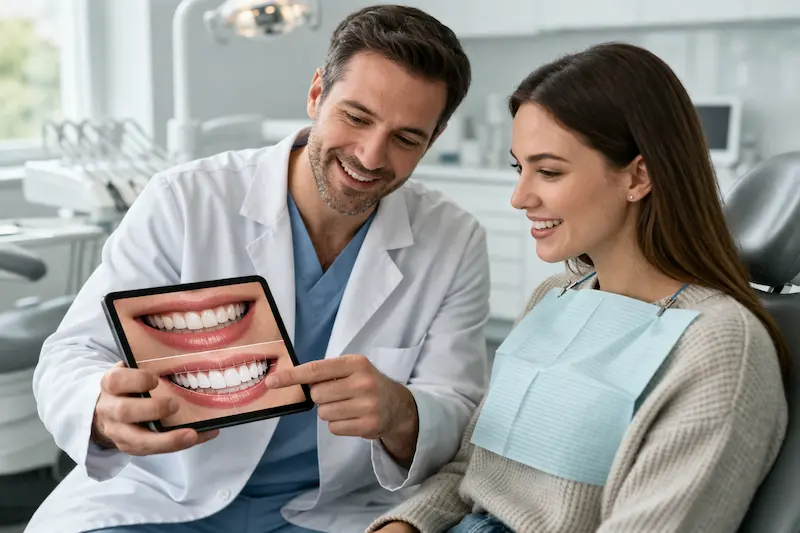
Understanding the Patient’s Expectations
A successful veneer plan depends not only on the teeth, but also on the patient’s expectations. Some patients want very subtle refinement, while others request a more visible change in tooth color, shape, or smile symmetry. These expectations need to be discussed clearly before treatment begins.
This conversation helps define whether the goal is natural enhancement, correction of isolated irregularities, or broader smile improvement. A patient-centered plan should align aesthetic wishes with clinical realities, so that the final result remains appropriate, functional, and realistic.
Smile Analysis and Treatment Planning
Once the examination is completed, the next stage involves smile analysis and treatment planning. The dentist evaluates tooth proportions, gum display, smile line, lip movement, facial balance, and the visibility of the teeth during speech and expression.
This planning stage is often what determines the quality of the final outcome. Veneers should not be shaped according to a generic design template. They should be adapted to the individual’s facial features and oral condition, with attention to both aesthetics and function.
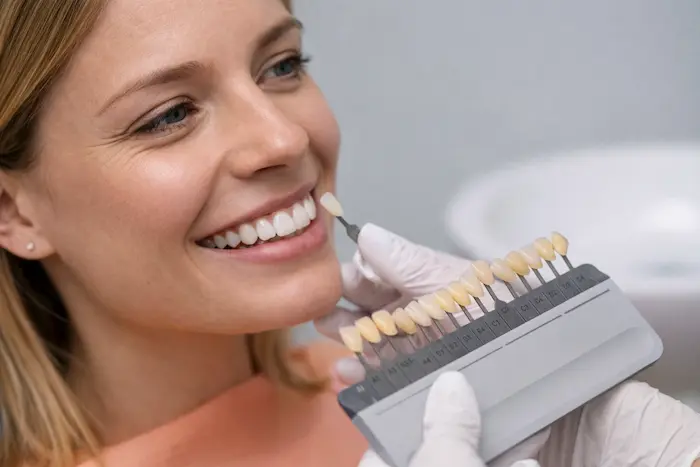
Shade and Shape Selection
Before the restorative phase begins, the expected tooth shade and general form are usually discussed. The goal is not simply to choose a brighter color, but to select a shade that appears balanced with the patient’s age, skin tone, facial expression, and surrounding teeth.
Shape selection is equally important because length, width, incisal contour, and symmetry all affect how natural the smile will appear. In well-planned cases, the result should look harmonious rather than exaggerated or artificially uniform.
Tooth Preparation
If the patient is a suitable candidate, the teeth are prepared according to the planned design. In many cases, veneer preparation is limited and involves removing a small amount of enamel from the front surface of the tooth to create space for the restoration.
The amount of preparation depends on the original position, color, and form of the teeth as well as the chosen material. Some cases allow very conservative preparation, while others require more adjustment to avoid excessive thickness or an unnatural final contour.
Impression or Digital Scan
After preparation, the teeth are recorded so the veneers can be designed accurately. This may be done using a traditional impression material or with a digital intraoral scan, depending on the clinical workflow and available technology.
The purpose of this step is to transfer the shape, position, and details of the teeth precisely for restoration design. Accuracy at this stage is important because even small discrepancies can affect marginal fit, comfort, and the overall appearance of the final veneers.
Temporary Phase When Needed
In some cases, temporary restorations may be placed while the final veneers are being prepared. These temporary coverings help protect the teeth and allow the patient to continue daily activities more comfortably during the waiting period.
Not every case requires temporaries in the same way, especially if preparation is minimal. However, when they are used, they can also provide useful feedback on shape, length, and speech before the final restorations are bonded.
Laboratory Fabrication or Restoration Design
The veneers are then fabricated according to the approved treatment plan. This stage may take place in a dental laboratory or within a digitally supported restorative workflow, depending on the clinical setting and material choice.
At this point, the design must reflect more than appearance alone. Fit, margin quality, translucency, surface texture, and occlusal compatibility all influence whether the restoration will function well and look natural in the mouth.
Try-In and Final Evaluation
Before permanent bonding, the veneers are usually tried in to evaluate fit, shade, contour, and general harmony. This allows the dentist to assess whether the restorations match the treatment plan and whether small adjustments are needed before final placement.
This stage is important because it confirms both aesthetic and functional compatibility. The restorations should not only look balanced in the smile, but also feel comfortable during speech, lip movement, and gentle bite contact.
Bonding the Veneers
Once the evaluation is complete, the veneers are bonded to the teeth using adhesive techniques designed for long-term retention. The tooth surface and the veneer surface are prepared according to the selected material and bonding protocol.
Bonding is one of the most critical steps in the entire procedure. Even well-made veneers may fail if adhesive protocols are not performed carefully. For this reason, attention to moisture control, fit, and proper technique plays a major role in long-term success.
Finishing and Bite Adjustment
After bonding, the final surfaces are refined and the bite is checked. The dentist ensures that the patient can close comfortably, speak normally, and use the teeth without premature or harmful contact.
Small finishing adjustments may be needed to improve polish, contour, or contact points. This final stage helps protect both the restorations and the surrounding teeth by ensuring that aesthetics and function remain in balance.
Follow-Up After the Procedure
After placement, follow-up care is usually recommended to monitor adaptation, gum response, and comfort. The patient may be advised about oral hygiene, dietary caution in the early period, and protective measures if there is a history of clenching or grinding.
The veneer procedure should be understood as a process rather than a single cosmetic act. Long-term success depends on accurate planning, careful execution, and regular maintenance after the restorations are completed.
How Long Does Veneer Treatment Take in Turkey?
Treatment Duration Depends on the Case
The time needed for veneer treatment in Turkey depends on the number of teeth involved, the condition of the teeth and gums, the type of veneer planned, and whether any preliminary treatment is required. Some patients need only a limited aesthetic correction, while others require a broader treatment plan that includes oral health stabilization before veneers are placed.
For this reason, there is no single timeline that fits every patient. A straightforward case involving healthy gums, stable bite conditions, and a small number of front teeth may progress more quickly than a case that requires diagnostic adjustments, temporary restorations, or additional restorative planning.
The First Appointment Is Usually for Assessment
The first stage is generally dedicated to consultation, examination, and treatment planning. During this visit, the dentist evaluates suitability, discusses expectations, reviews smile design goals, and determines whether veneers are the most appropriate option.
This visit may also include imaging, intraoral records, photographs, and planning for shade and shape. If oral health issues are detected during the assessment, the overall timeline may need to be extended so that these concerns can be treated before the aesthetic phase begins.
Tooth Preparation and Records Often Require a Separate Visit
Once treatment is confirmed, the next step usually involves tooth preparation and the collection of impressions or digital scans. This phase is important because the restorations need to be designed with precision, especially when multiple front teeth are being treated together.
Depending on the clinical workflow, this stage may occur on the same day as planning or at a separate appointment. In patients with a more complex smile design, additional time may be needed to finalize form, length, or proportional balance before the restorations move to fabrication.
Laboratory Time Is Part of the Process
When veneers are fabricated indirectly, laboratory production becomes part of the treatment timeline. The restorations need time to be designed, layered, milled, finished, or refined according to the treatment plan and material selected.
This is one reason why veneer treatment is not usually completed in a single session. Even when the clinical steps progress efficiently, the final result still depends on the accuracy and quality of the restoration process outside the chair.
Temporary Restorations May Be Used in the Interim
If the teeth have been prepared and the final veneers are not ready on the same day, temporary restorations may be placed. These help protect the teeth, maintain appearance, and allow the patient to function more comfortably until the definitive restorations are delivered.
The temporary period may also provide useful information about speech, smile line, and general comfort. In some cases, small refinements can still be made before the final bonding stage if the temporary phase reveals an issue that should be improved.
Final Placement Usually Requires Another Appointment
The final appointment generally includes try-in, clinical evaluation, bonding, finishing, and bite control. At this stage, each veneer is assessed for fit, contour, shade, and compatibility with the overall smile plan before permanent placement is completed.
This means veneer treatment usually progresses through stages rather than being treated as a one-step cosmetic procedure. Even when the schedule is compact, the final visit remains essential because it determines how well the restorations function and integrate in the mouth.
International Patients Often Ask About Travel Timing
For patients traveling to Turkey, timing becomes an especially important part of treatment planning. Many international patients want to understand how long they may need to stay and whether the process can be completed within a limited visit window.
The answer depends on whether the case is straightforward or clinically layered. Some patients may be suitable for a shorter and more efficient schedule, while others may need additional time because of oral health findings, bite adjustments, or the need for more careful aesthetic planning.
A Short Timeline Should Not Replace Proper Planning
It is understandable that some patients prefer fast treatment, especially when traveling from abroad. However, a shorter timeline should never come at the expense of clinical accuracy, tissue health, or restorative quality.
Well-planned veneer treatment requires enough time for diagnosis, preparation, fabrication, evaluation, and bonding. If the process is rushed without respecting these stages, the patient may receive a result that looks acceptable initially but performs poorly over time.
Some Cases Need Preliminary Treatment First
Not every veneer case can begin immediately after consultation. If the patient has active gum inflammation, untreated decay, old restorations that need attention, or signs of functional overload, those issues may need to be managed first.
In such situations, the overall treatment timeline becomes longer, but this is part of responsible care rather than delay. A medically guided sequence helps ensure that veneers are placed on teeth and gums that are prepared to support them properly.
The Number of Veneers Also Changes the Timeline
A patient treating one or two teeth may have a different timeline from someone receiving veneers across the full smile zone. As the number of treated teeth increases, coordination of shape, shade, symmetry, and bite becomes more detailed.
This does not necessarily make treatment difficult, but it does make planning more precise. Larger aesthetic cases often require more careful review because each tooth affects the visual balance of the others.
Follow-Up Should Be Considered Part of the Timeline
The treatment process does not end the moment the veneers are bonded. Follow-up may be recommended to evaluate gum response, comfort, adaptation, and occlusion after placement.
This is especially relevant for patients who have a history of grinding, sensitivity, or functional strain. A complete view of treatment timing should include not only how quickly veneers are placed, but also how the patient is monitored after the procedure.
Time Should Be Evaluated Together With Safety and Suitability
When considering veneer treatment in Turkey, duration should be understood as one part of a broader clinical plan. The most appropriate timeline is not simply the shortest one, but the one that allows examination, diagnosis, restorative precision, and proper follow-up.
A carefully planned treatment schedule supports a more natural result and a more stable long-term outcome. In aesthetic dentistry, efficiency is valuable, but only when it remains compatible with oral health and restorative safety.
Possible Risks, Limitations, and Side Effects of Dental Veneers
Temporary Tooth Sensitivity
After veneer preparation, some patients may experience temporary sensitivity, especially to hot or cold foods and drinks. This is usually related to the enamel reduction process and the bonding stage, where the tooth becomes more responsive to external stimuli.
In most cases, this sensitivity decreases over time as the teeth adapt and the bonding interface stabilizes. However, the level and duration may vary depending on individual sensitivity, enamel thickness, and overall oral condition.
Risk of Chipping or Fracture
Although veneers are designed to be durable, they are not indestructible. Excessive biting force, habits such as nail biting or opening objects with teeth, and untreated clenching or grinding may increase the risk of chipping or fracture.
This risk is generally low in well-planned cases, but it becomes more relevant when functional forces are not properly managed. For this reason, protective measures and correct bite adjustment are essential parts of long-term success.
Debonding or Loss of Retention
Veneers are bonded to the tooth surface using adhesive techniques, and in rare situations, they may partially or completely debond. This can occur due to excessive force, moisture contamination during bonding, or unfavorable enamel conditions.
Proper technique significantly reduces this risk, but patients should still be aware that adhesive restorations require careful placement and maintenance. If debonding occurs, the restoration may need to be repaired or replaced depending on the situation.
Gum Irritation or Inflammation
If veneers are not properly contoured or if oral hygiene is insufficient, the surrounding gum tissue may become irritated. Over-contoured restorations, rough margins, or plaque accumulation can lead to inflammation over time.
Healthy gum response depends on both clinical precision and patient care. Regular brushing, flossing, and professional follow-up play a key role in maintaining gum health after veneer placement.
Irreversibility of the Procedure
In many cases, veneer treatment involves removing a small amount of enamel from the tooth surface. This means the process is generally not reversible, as the tooth will continue to require some form of restoration after preparation.
For this reason, veneers should be considered carefully and planned appropriately. Even though the preparation is often minimal, it still represents a permanent change to the natural tooth structure.
Color Stability and Matching Considerations
Ceramic veneers are known for maintaining their color over time, but surrounding natural teeth may change in shade due to aging, diet, or lifestyle habits. This can create a difference between treated and untreated teeth.
In addition, if only a few teeth are treated, achieving perfect color harmony may require careful planning. Shade selection should consider both the current and potential future appearance of adjacent teeth.
Limitations in Severe Cases
Veneers are not designed to correct every dental problem. Severe misalignment, significant structural damage, advanced bite issues, or extensive tooth loss may require different or additional treatments.
Attempting to use veneers beyond their appropriate indication may compromise both aesthetics and function. A realistic understanding of their limitations helps prevent over-treatment or unsuitable case selection.
Need for Long-Term Maintenance
Even though veneers can provide stable aesthetic results, they are not maintenance-free. Patients still need to follow good oral hygiene practices and attend regular dental check-ups to monitor both the restorations and surrounding tissues.
Long-term success depends on how well the restorations are cared for after placement. Without proper maintenance, complications such as gum problems, wear, or damage may occur over time.
Possible Need for Replacement Over Time
Like all dental restorations, veneers may eventually need replacement due to wear, damage, or changes in oral conditions. The timing varies depending on individual factors such as oral habits, hygiene, and functional forces.
This does not mean veneers are short-lived, but it does mean they should be viewed as part of a long-term dental plan rather than a one-time permanent solution.
Importance of Proper Case Selection
Many of the risks associated with veneers can be minimized through correct diagnosis, treatment planning, and execution. Problems are more likely to arise when veneers are applied in cases where they are not the most suitable option.
A medically guided approach helps ensure that veneers are used appropriately, on the right patients, and under the right conditions. This reduces complications and supports more predictable long-term outcomes.
How Long Do Dental Veneers Last?
Longevity Varies by Individual Factors
The lifespan of dental veneers is not fixed and can vary depending on several factors related to the patient, the material used, and the quality of treatment planning. While veneers are designed to provide long-term aesthetic improvement, their durability is influenced by how they are used and maintained over time.
Patients often expect a clear number of years, but it is more accurate to understand longevity as a range rather than a guarantee. The condition of the underlying tooth, oral hygiene habits, bite forces, and lifestyle choices all contribute to how long the restorations remain stable.
Material Type Plays an Important Role
Different veneer materials may show different long-term behavior. Ceramic-based veneers are generally known for their surface stability, resistance to staining, and ability to maintain their appearance over time.
Composite-based alternatives may be suitable in selected cases, but their surface characteristics can change more noticeably with use. This does not make them unsuitable, but it does mean that material selection should be aligned with the patient’s expectations and long-term goals.
Oral Hygiene and Daily Care
Good oral hygiene is one of the most important factors affecting how long veneers last. Regular brushing, flossing, and professional cleaning help maintain both the restorations and the surrounding gum tissue.
Poor oral hygiene may lead to gum inflammation, plaque accumulation, and secondary dental problems around the treated teeth. Even though veneers cover part of the tooth surface, the rest of the tooth and supporting tissues still require consistent care.
Bite Forces and Functional Habits
The way a patient uses their teeth has a direct impact on veneer longevity. Normal chewing function is expected and supported, but excessive force from habits such as clenching or grinding can place additional stress on the restorations.
Patients with bruxism or heavy bite forces may require protective measures, such as a night guard, to reduce the risk of wear or damage. Managing functional load is an important part of maintaining long-term stability.
Dietary Habits and Lifestyle Factors
Everyday habits can also influence how veneers perform over time. Frequently biting very hard objects, using teeth as tools, or exposing restorations to repeated mechanical stress may increase the risk of damage.
In addition, while ceramic materials are generally resistant to staining, surrounding natural teeth may still be affected by dietary habits such as frequent consumption of strongly pigmented foods and beverages. This can influence the overall visual harmony of the smile over time.
Quality of Treatment Planning and Execution
The longevity of veneers depends not only on the material, but also on how well the case is planned and executed. Proper diagnosis, accurate preparation, precise bonding, and balanced bite adjustment all contribute to long-term success.
Even high-quality materials may not perform well if the underlying planning is incomplete or if functional factors are overlooked. For this reason, clinical quality plays a central role in how long veneers remain stable.
Number of Treated Teeth and Case Complexity
The extent of treatment can also affect longevity. A single veneer in an otherwise stable dentition may behave differently from a full smile design involving multiple teeth, where coordination of shape, contact, and bite becomes more complex.
This does not mean that larger cases are less successful, but it does mean they require more detailed planning and careful follow-up to ensure that all restorations function together harmoniously.
Regular Follow-Up and Professional Monitoring
Routine dental visits allow early detection of any issues that may affect veneers over time. Small adjustments, polishing, or preventive care can help maintain both the restorations and surrounding tissues.
Follow-up appointments are not only for checking the veneers themselves, but also for monitoring gum health, bite stability, and general oral condition. This ongoing evaluation supports long-term durability.
Possibility of Repair or Replacement
Over time, veneers may require maintenance, repair, or replacement depending on wear, damage, or changes in the oral environment. The timing of this varies widely between patients.
Understanding this possibility helps set realistic expectations. Veneers are long-lasting restorations, but they are part of a continuing dental care process rather than a one-time permanent solution.
Longevity Depends on Balance, Not Just Material
It is common to focus on material strength when discussing how long veneers last. However, longevity depends on a balance between aesthetics, function, oral health, and patient habits.
When veneers are placed on healthy teeth, used within normal functional limits, and supported by proper care, they can remain stable for many years. When these conditions are not met, their lifespan may be reduced regardless of material choice.
How to Care for Dental Veneers After Treatment
Maintain Daily Oral Hygiene
Regular oral hygiene remains essential after veneer treatment. Brushing at least twice a day with a non-abrasive toothpaste and using dental floss or interdental cleaners helps protect both the veneers and the surrounding gum tissue.
Even though veneers cover part of the tooth surface, the natural tooth structure and gum margins are still vulnerable to plaque accumulation. Consistent hygiene supports not only the appearance of the restorations but also their long-term stability.
Choose Non-Abrasive Dental Products
Some toothpastes contain highly abrasive particles that may gradually affect the surface polish of restorations. For this reason, it is generally recommended to use products that are suitable for daily use without excessive abrasion.
Maintaining a smooth surface helps preserve the natural-looking finish of veneers and may reduce the tendency for plaque accumulation. Product selection does not need to be complex, but it should be appropriate for long-term restorative care.
Avoid Excessive Mechanical Stress
Veneers are designed to function under normal chewing forces, but they should not be exposed to unnecessary mechanical stress. Habits such as biting hard objects, opening packages with teeth, or chewing on ice may increase the risk of damage.
Protecting restorations from avoidable force is part of maintaining their integrity. Patients are usually advised to treat veneers as part of a functional dentition rather than using them in ways that exceed normal use.
Manage Clenching or Grinding Habits
Patients who clench or grind their teeth may need additional protection to preserve their restorations. A custom night guard may be recommended to reduce stress on both the veneers and natural teeth during sleep.
Managing these habits is important not only for the restorations but also for the overall health of the jaw and supporting structures. Long-term stability depends on controlling excessive forces where possible.
Be Mindful of Dietary Habits
While many ceramic veneers are resistant to staining, surrounding natural teeth can still be affected by strongly pigmented foods and beverages. Over time, this may create a difference in color between treated and untreated teeth.
Being aware of dietary habits does not mean avoiding certain foods entirely, but it may help maintain overall smile harmony. Rinsing with water after consuming staining substances can be a simple supportive measure.
Do Not Skip Regular Dental Check-Ups
Routine dental visits remain important after veneer placement. These visits allow the dentist to monitor the condition of the restorations, check gum health, and evaluate bite stability.
Early detection of minor issues can help prevent more significant problems later. Regular professional cleaning also supports both aesthetic appearance and oral health.
Address Any Discomfort Early
If a patient experiences unusual sensitivity, discomfort when biting, or a feeling that something is not aligned properly, it is advisable to seek professional evaluation rather than waiting for the issue to resolve on its own.
Small adjustments may sometimes be needed after placement, especially in the early adaptation phase. Addressing concerns early can help maintain comfort and prevent complications.
Protect Both Veneers and Natural Teeth
It is important to remember that veneers are only part of the dentition. The surrounding teeth, gums, and supporting structures still require the same level of care and attention as before treatment.
A balanced approach to oral care ensures that both natural and restored teeth remain healthy. The goal is not only to maintain the veneers, but also to preserve the overall oral environment.
Understand That Maintenance Is Ongoing
Veneers do not eliminate the need for ongoing dental care. They are designed to improve aesthetics and function, but their performance depends on how well they are maintained over time.
Patients who follow professional recommendations, maintain good hygiene, and attend regular check-ups are more likely to experience stable and satisfactory long-term results.
Long-Term Success Is a Shared Responsibility
The durability of veneer treatment depends on both clinical quality and patient behavior. While the procedure itself is performed by the dentist, long-term success involves daily habits, awareness, and regular follow-up.
A well-maintained restoration can continue to function comfortably and look natural for many years when supported by consistent care.
Why Consider Dental Veneers in Turkey?
Access to Structured Treatment Planning
Dental veneer treatment in Turkey is often evaluated within a structured clinical framework rather than as a single cosmetic procedure. Many healthcare institutions follow a step-by-step approach that includes examination, diagnosis, planning, and controlled application.
This structured process allows aesthetic goals to be balanced with oral health requirements. Instead of focusing only on appearance, treatment planning may also consider gum condition, bite stability, and long-term function, which are essential for sustainable results.
Experience With International Patients
Turkey has become a well-known destination for patients traveling from different countries for dental care. As a result, many institutions are familiar with the expectations and concerns of international patients, including communication, scheduling, and treatment coordination.
This experience may help create a more organized treatment process, especially for patients who are planning their visit within a limited timeframe. However, individual suitability should always be assessed carefully, regardless of travel considerations.
Comprehensive Approach to Aesthetic Dentistry
In many clinical settings, veneers are not evaluated in isolation but as part of a broader aesthetic dentistry concept. This may include smile analysis, proportion assessment, and consideration of how different treatments interact with each other.
Such an approach helps ensure that the final result is not only visually improved but also compatible with the patient’s natural dental structure and facial features. A comprehensive perspective often supports more balanced and predictable outcomes.
Use of Contemporary Dental Techniques
Modern veneer procedures may involve digital scanning, detailed smile analysis, and material selection based on both aesthetic and functional requirements. These techniques aim to improve precision and consistency throughout the treatment process.
While the availability of technology may vary between institutions, the overall goal remains the same: to provide restorations that integrate naturally with the patient’s dentition and perform reliably over time.
Importance of Individual Evaluation
Despite the general advantages associated with treatment in Turkey, the most important factor remains individual evaluation. Not every patient is a candidate for veneers, and not every case can be planned within the same timeframe.
A careful assessment helps determine whether veneer treatment is appropriate, whether additional procedures are needed, and how the process should be structured. This individualized approach supports both safety and long-term satisfaction.
Dental veneer treatments are performed within a structured clinical framework in our hospital setting, based on individual assessment, medical planning, and long-term oral health considerations.
FAQ
What are dental veneers used for?
Dental veneers are used to improve the appearance of teeth by addressing concerns such as discoloration, minor chips, small gaps, uneven shapes, and mild alignment irregularities. They focus on the visible front surface of the teeth.
Are dental veneers a permanent treatment?
Veneers are considered a long-term restoration, but they are not completely permanent. Since a small amount of enamel is usually removed, the tooth will continue to require restoration over time, and replacement may eventually be needed.
Is the veneer procedure painful?
The procedure is generally performed with appropriate clinical care, and most patients experience minimal discomfort. Some temporary sensitivity may occur after preparation, but this usually decreases over time.
How many days does veneer treatment take in Turkey?
The duration varies depending on the case, but treatment is typically completed over several stages, including consultation, preparation, fabrication, and placement. The exact timeline depends on individual clinical needs.
Can veneers look natural?
Yes, when properly planned, veneers can be designed to match natural tooth color, translucency, and proportions. A natural result depends on individualized planning rather than a uniform aesthetic approach.
Do veneers require special care?
Veneers do not require complex care, but they do require consistent oral hygiene, regular dental visits, and avoidance of habits that may damage the restorations.
Can veneers be repaired if damaged?
In some cases, minor damage may be repaired depending on the material and extent of the issue. However, more significant damage may require replacement of the veneer.
Are veneers suitable for everyone?
No, veneers are not suitable for every patient. Suitability depends on oral health, enamel condition, bite function, and the type of aesthetic concern being addressed.